
Sound Baths
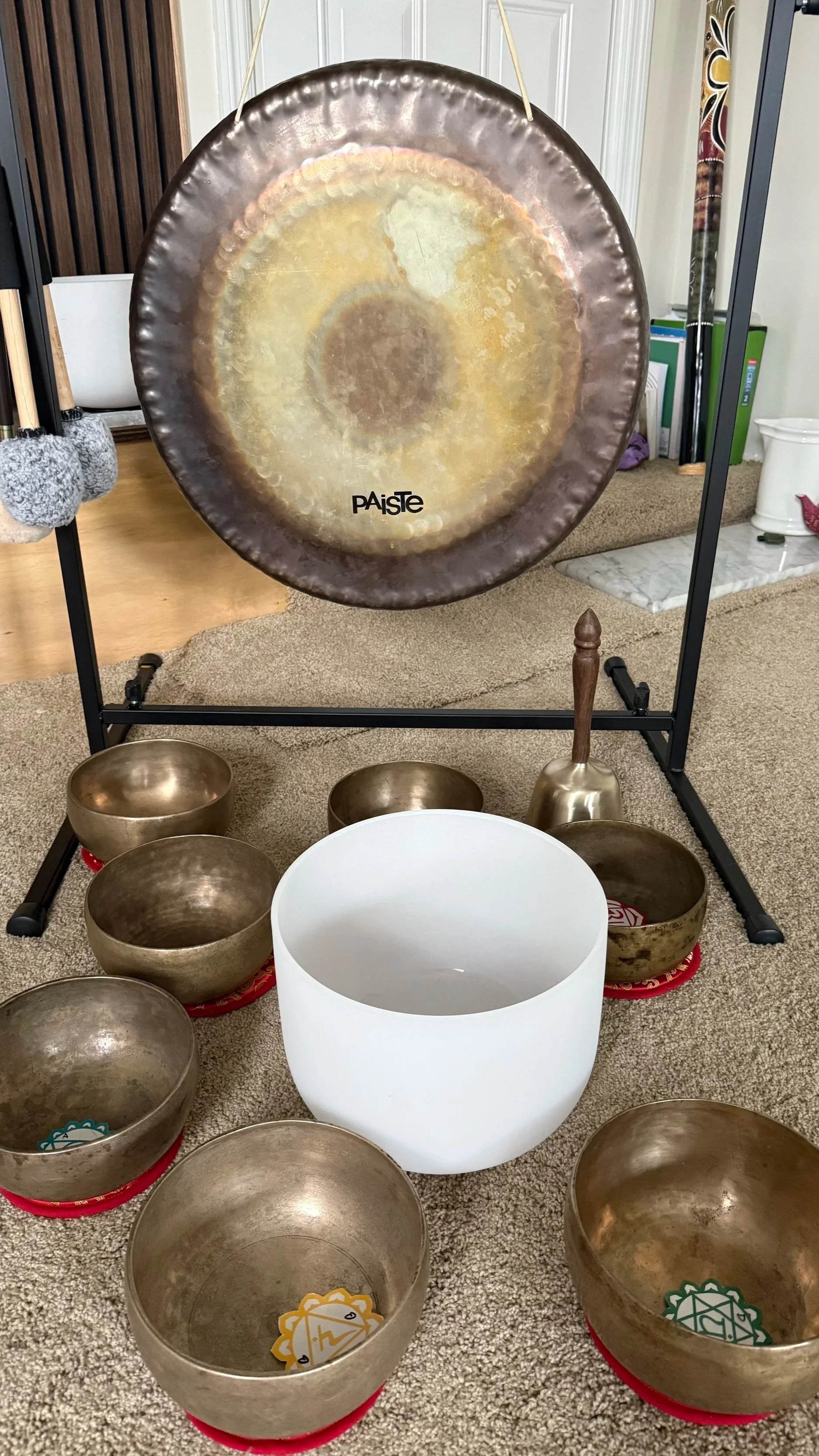
Sound baths offer a gentle and immersive way to relax the body and mind, using sound in much the same way humans have for thousands of years. Long before modern science began exploring the effects of sound on the nervous system, ancient cultures understood that sound could influence emotional and physical well-being. In India, rhythmic chanting was used to quiet the mind and deepen meditation. In ancient Greece, philosophers explored how musical tones affected harmony and balance within the body. Indigenous communities around the world used drums, rattles, and vocal tones to help people feel grounded, connected, and restored. Modern sound baths draw inspiration from these traditions, bringing ancient practices into a calm and contemporary setting.
Today, respected medical institutions such as UCLA Health and Cleveland Clinic recognize sound baths as a supportive form of meditative sound therapy associated with deep relaxation, stress reduction, and improved mood. Unlike silent meditation, sound baths give the mind something to focus on through listening, which can help quiet mental chatter and make meditative states feel more accessible.
From a scientific perspective, sound baths help encourage the body to shift out of stress mode. The slow, steady tones of instruments such as singing bowls, chimes, and gongs can guide the brain from an active “beta” state into slower “alpha,” “theta,” and “delta” brain wave states associated with relaxation, creativity, meditation, and restorative rest. As the nervous system begins to settle, breathing slows, muscles soften, and the heart rate naturally eases.
The frequencies and vibrations used in sound healing are also believed to stimulate the parasympathetic nervous system - the body’s natural “rest-and-restore” response - helping create a deeper sense of calm and physical ease. Because sound is not only heard but also felt, the gentle vibrations created by sound bath instruments can increase body awareness and promote grounding. Since the human body is made largely of water, these vibrations often feel deeply immersive and soothing.
Research on sound baths is still evolving, yet existing studies continue to show promising results. A widely referenced study published in the Journal of Evidence-Based Complementary & Alternative Medicine by Tamara L. Goldsby found that a single one-hour Tibetan singing bowl meditation significantly reduced participants’ feelings of tension, anxiety, fatigue, anger, and depression.
Additional reported benefits of sound baths include:
Pain Relief: Immersive sound experiences can help redirect attention away from physical discomfort and encourage the release of endorphins.
Reduced Cortisol Levels: Some studies have observed measurable decreases in cortisol, the body’s primary stress hormone, following sessions.
Improved Sleep: By calming the nervous system, sound baths are often used to encourage deeper and more restorative sleep.
Meditation
Meditation is a practice that has supported the well-being of the body and mind for thousands of years, offering a quiet space to pause, breathe, and turn inward. Its roots can be traced to ancient cultures, where meditation and contemplative practices were used to cultivate clarity, balance, and self-awareness. Monks, philosophers, and healers recognized that stillness and attention calm the mind and bring the body into a more harmonious state.
From a scientific standpoint, meditation has a measurable impact on the body’s stress response. When practiced regularly, it helps shift the nervous system out of “fight or flight” mode and into a more relaxed, restorative state. Studies have shown that meditation supports emotional regulation and reduces the effects of ongoing stress, helping the body return to a sense of balance.
Meditation also influences brain activity. As attention settles and mental chatter softens, the brain produces calmer brain wave patterns associated with relaxation and focused awareness. Over time, this enables improved focus, greater emotional resilience, and a deeper sense of presence. Rather than trying to stop thoughts, meditation gently teaches the mind to observe without judgment, creating space between thoughts and reactions.